Shorter distances
MT units for unsorted waste are installed within the urban area, much closer than the distant sanitary landfills.

Waste
Lower logistics costs = more resources for treatment
Mechanical Treatment (MT) units allow the unsorted waste received (without selective collection) to be separated into three major fractions: recyclables, organics and rejects.
Logistics
Once separated, these fractions can be valorized to recover materials on an industrial scale and generate renewable energy within the urban area.
The investments needed to build and operate MT units are made possible by the financial resources saved by streamlining logistics services.
MT units for unsorted waste are installed within the urban area, much closer than the distant sanitary landfills.
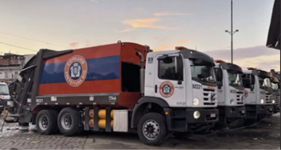
Reducing the volume of waste hauled to distant landfills makes each garbage truck more productive, as it completes its collection routes faster.
Efficiency
This streamlining of logistics directly improves the efficiency of waste collection and transport, since it makes it possible to serve the same population with a fleet of garbage trucks at least 30% smaller than the fleet currently in use.
By delivering these major savings in collection and transport (lower CAPEX and OPEX for garbage trucks), a significant part of the resources needed to build the industrial units that valorize each fraction of unsorted waste becomes available.
Spending is thus redistributed between essential public cleaning services and treatment, reducing the material sent to landfills and making the system more efficient.
Benefits
When local governments (municipalities) prioritize building industrial Mechanical Treatment units for unsorted waste, numerous benefits can be achieved, such as:
A longer lifespan for existing sanitary landfills.
Both in the manual sorting stage of industrial Mechanical Treatment (MT) units and in the industries that manufacture new recycled products.
The main input of organic farming, which supports production on small farms and healthy food for the whole population.
Organic compost retains moisture and fixes carbon in the soil.
Less garbage truck traffic, which means fewer traffic jams in cities and also lower CO2 emissions from all light vehicles and shorter travel times, whether people use public or private transport.
Enables new industries that use recyclable waste as raw material, promoting the conservation of biodiversity and natural resources by minimizing the use of existing deposits and avoiding the exploitation of new ones.
Depending on the region, renewable energy can be generated by combusting (burning) the reject fraction (the non-recyclable fraction of urban waste) in a Reject Energy Recovery Plant (CRER), or by producing refuse-derived fuel (RDF) for the cement industry.
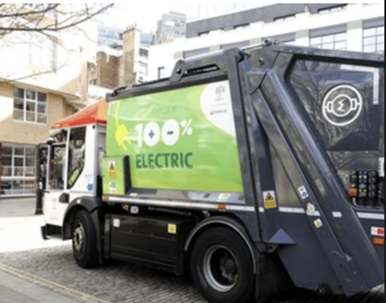
Allows garbage trucks and transfer trailers to be electric, charged with the energy generated at the CRER.
If there is no agricultural demand for organic compost in the project region, the organic fraction can be sent to bioenergy sanitary landfills to generate electricity or produce biofuel (biomethane) for the fleet of garbage trucks and trailers.
By reducing methane and CO2 emissions, Aiesse Ambiental’s projects help industrialized countries meet their carbon emission reduction targets (NDCs) faster and at lower cost, while generating carbon credits that can become an additional source of revenue when traded on the international market or on the Brazilian domestic market, which is currently being regulated.
Continue to